



1 June 2026
What makes healthcare garments fit for clinical use?
Not all uniforms are built for clinical environments. The demands placed on healthcare workwear go far beyond what is expected of standard corporate or industrial clothing. Garments worn in hospitals, care homes, and community settings must withstand frequent industrial laundering, support infection prevention protocols, allow freedom of movement during physically demanding shifts, and still look professional after months of heavy use.
Choosing the right healthcare uniforms can be a complicated task for procurement managers and estates leads at NHS trusts and large care-home groups. Your decisions affect clinical safety, staff wellbeing, and operational efficiency. Getting it wrong means garments that shrink, fade, lose their shape, or compromise infection control standards. Getting it right means a uniform for healthcare workers that supports them throughout every shift and reflects the professionalism of the organisation they represent.
why clinical environments demand more from a uniform
A hospital ward, an outpatient clinic, a mental health unit, and a community care setting each present different challenges, but they share a common thread. The garments worn by staff are in constant contact with patients, clinical equipment, and environments where the risk of cross-contamination is real.
Hospital workwear and clothing must be designed from the outset to meet clinical requirements, rather than being adapted from garments originally made for other sectors. That means every element of the garment, from the fabric composition through to the construction, the fastenings, and the fit, should be chosen with the clinical environment in mind. When you are responsible for uniform provision across a large trust or care group, understanding these requirements helps you make procurement decisions that are genuinely fit for purpose.


“Stretch, softer materials and range of motion are critical for today’s wearer to complete their responsibilities comfortably. What you put on your body everyday matters, which is why we spend so much time on innovation as a business, exploring polymer science, fibre and yarn construction and fabric finishing to create uniforms that meet these needs.”
Sara Catanzaro, Design Manager at alsico
infection control is the foundation of clinical-grade garments
Infection control is arguably the single most important factor in determining whether a garment is fit for clinical use. The relationship between nursing uniforms and infection control has been well established: garments act as a potential vector for healthcare-associated infections (HCAIs) if they cannot be effectively decontaminated between uses.
For a garment to function as part of your trust's infection prevention strategy, it must meet several requirements:
fabric and laundering performance
Infection control uniforms must be able to withstand washing at temperatures of 60°C or above. This is the threshold recommended by NHS infection prevention guidance for effective decontamination. But surviving high temperatures is only part of the challenge. The fabric must also retain its shape, colour, and structural integrity after repeated industrial wash cycles, which is typically over 50 washes across the garment’s life.
Fabrics that pill, thin, or lose their colour after a few washes are not suitable for clinical use, regardless of how they look when new. Procurement decisions should always account for how a garment performs over its full lifecycle, not just at the point of purchase.
design features that support hygiene
Garment design can support infection prevention and control by enabling effective hygiene practices and reducing the risk of contamination during patient care. Healthcare clothing should be designed so that it does not impede hand hygiene, does not come into unnecessary contact with patients, and can withstand frequent laundering in accordance with healthcare requirements.
Key design considerations include:
- Sleeve designs that support bare-below-the-elbows compliance during direct patient care activities.
- Simple, functional garment construction that avoids unnecessary decorative features that may interfere with clinical tasks or laundering.
- Closures that are secure, durable, and suitable for repeated industrial laundering.
- Fabrics and garment construction that withstand frequent washing and decontamination processes while maintaining performance and appearance.
- Pocket configurations that provide practical storage without compromising hygiene practices or ease of laundering.
Durability and performance under demanding conditions
Trusts with thousands of clinical staff will inevitably need garments across a wide spectrum of sizes. A limited size range forces staff into ill-fitting garments, which affects both comfort and protection. Clinical-grade uniform programmes should offer a comprehensive range, including options for taller, shorter, and larger body types, as well as maternity variations.
Durability in healthcare workwear is about consistent performance and longevity. A medical staff uniform needs to look and function as well on wash 50 as it did on wash one. Here are the key areas where durability matters most:
colour retention
Colour-coded uniforms are essential for role identification across NHS trusts. If garments fade unevenly or lose vibrancy after repeated washes, the colour system breaks down, and staff become harder to identify. Clinical-grade fabrics are dyed using processes that lock colour in, even at high wash temperatures.
shape and structural integrity
Garments that stretch, sag, or shrink after laundering quickly look unprofessional and can affect fit. For healthcare workers who rely on freedom of movement, a garment that loses its shape can become restrictive or uncomfortable. Well-constructed clinical garments maintain their dimensions across their full service life.
fabric strength
Healthcare is physically demanding. Staff bend, reach, kneel, and move patients throughout every shift. Fabrics must resist tearing and abrasion at stress points such as underarms, knees, and waistbands. Reinforced stitching and carefully selected fabric weights ensure garments stand up to daily clinical use.
comfort and fit to support your staff through every shift
Comfort is not a luxury in clinical garments. It is a safety and performance requirement. Our research found that 58% of respondents say the fit of their uniform affects how effectively they can carry out their duties. In a sector where staff retention is a constant challenge, the uniform you provide sends a clear message about how your organisation values the people who wear it.
When selecting a uniform for healthcare workers, comfort should be assessed across several dimensions:
- Breathability and moisture management, particularly for staff working in warm ward environments or undertaking physical tasks.
- Stretch and ease of movement, so garments do not restrict clinical activities like bending, lifting, or patient handling.
- Lightweight construction that reduces heat stress during long shifts without compromising durability.
- Ergonomic design that follows the natural contours of the body rather than relying on generic, boxy shapes.
At alsico, our healthcare garments are designed with input from frontline staff. This means garments are tested in real working conditions. The wearer trials conducted as part of the NHS Healthcare Uniform Framework found that 87% of participants confirmed the garments provided a full range of movement, and 73% reported comfortable temperature regulation
Inclusive sizing and culturally sensitive design
A garment is only fit for clinical use if it works for every member of staff who needs to wear it. Inclusivity in healthcare uniforms means more than offering a wide size range. It also means designing garments that accommodate different body shapes, cultural requirements, and personal preferences.
Size range and fit options
Trusts with thousands of clinical staff will inevitably need garments across a wide spectrum of sizes. A limited size range forces staff into ill-fitting garments, which affects both comfort and protection. Clinical-grade uniform programmes should offer a comprehensive range, including options for taller, shorter, and larger body types, as well as maternity variations.
Cultural and religious considerations
A diverse workforce requires uniform options that respect cultural and religious needs. This may include longer-length tops, head coverings that integrate with the uniform system, or modest-fit alternatives. The garments should maintain infection control compliance while giving staff the ability to dress in a way that feels respectful and comfortable.
Gender-inclusive design
Gender-inclusive design is an important consideration in modern healthcare uniforms. Rather than treating one fit or style as the default, organisations should offer a range of options that accommodate different body shapes, preferences, and identities. Every variation should be designed with equal attention to comfort, functionality, durability, and professional appearance.
Role identification and professional image
In a busy clinical environment, patients and colleagues need to be able to identify who is who at a glance. Colour-coded uniforms serve a practical safety function, helping patients know who is providing their care and enabling staff to locate the right colleague quickly.
The NHS Healthcare Uniform Framework has established a standardised colourway system developed in conjunction with NHS England and professional bodies. Each base colour and contrasting trim clearly denotes a professional group, from nursing and midwifery to allied health professions and pharmacy. For trusts adopting the new NHS Healthcare Uniform, this system provides immediate visual clarity across all clinical settings.
In addition to role identification, a consistent, well-designed uniform reinforces organisational identity and professionalism. When every member of your clinical team is dressed in garments that are smart, well-fitted, and consistent, it creates a visible standard that patients and visitors recognise and trust.
Sustainability and responsible sourcing
Sustainability is now a contractual requirement in NHS procurement. Healthcare workwear that is truly fit for clinical use should also be fit for the NHS’s net zero ambitions. This means garments made from responsibly sourced materials, manufactured by suppliers who can demonstrate credible carbon reduction plans, and designed for longevity so they do not contribute to unnecessary textile waste.
The NHS Healthcare Uniforms are made using 100% recycled polyester and cotton sourced through the Better Cotton Initiative. Suppliers on the framework are assessed against the Evergreen Sustainable Supplier Assessment, carbon reduction plans, and modern slavery protocols. These criteria reflect a broader shift in how the NHS evaluates whether garments are fit for purpose.
At alsico, our sustainability commitments include GRS certification, circular textile solutions through our arx and 3CL initiatives, and full alignment with the NHS net zero supplier roadmap.
why choose alsico as your next supplier of GP surgery uniforms
Alsico understands the crucial role that GP uniforms play in keeping your medical and administrative staff safe and comfortable within the practice. Our wide range goes beyond surgery uniforms for clinical staff. We also supply NHS receptionist uniforms, blouses, and smart workwear for front-of-house teams. From hospitals and support services to health sciences, we offer custom solutions to ensure the safety of your team.
We are committed to providing specialised GP uniforms and receptionist uniforms designed to withstand rigorous use, whilst offering both contamination resistance and comfort for those long working hours. Our goal is to be your trusted source for top-quality GP surgery uniforms that meet the highest safety and comfort standards, benefiting both your staff and your patients.
When it comes to GP uniforms, here’s why alsico is the go-to:
healthcare environments we provide uniforms for
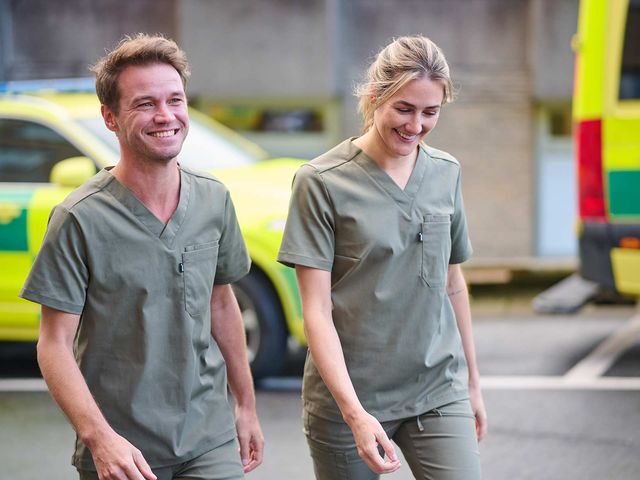
healthcare providers
Mobility, total hygiene and comfort. The high demands of an operating theatre are reflected one by one in our clean-air healthcare tunics and healthcare trousers.

healthcare science
From support areas to research labs, our healthcare garments uphold the highest standards, ensuring consistency and excellence throughout your healthcare sciences.

support services
Ensuring your entire operation is clothed in the very best, our workwear solutions for non-clinical areas ensure a consistent and high-quality result for your business.

business administration
Our range embodies a perfect blend of style and durability and meets the needs of the workplace environment. Experience the transformation our office wear solutions can bring to your role.

food services
Food preparation in a healthcare environment demands superior quality, high durability, and comfort for long shifts in the kitchens.

contamination control
When the height of safety is required, our healthcare garments for high-demand areas are made to perform.
get in touch
